Almost every conversation about rent in Berlin eventually comes back to one document: the Mietspiegel. The official Berlin rent index is the legal benchmark that defines what a fair rent looks like in any given building, in any given street, for any given size of apartment.
In 2026 it matters more than ever, because the Mietpreisbremse has been extended through 2029 and the gap between regulated rents and open-market asking rents has reached its widest level in a decade.
If you own or rent in Berlin, understanding how the Mietspiegel actually works in practice will save you money, time, and almost certainly a legal argument.
What the mietspiegel is and what it is not?
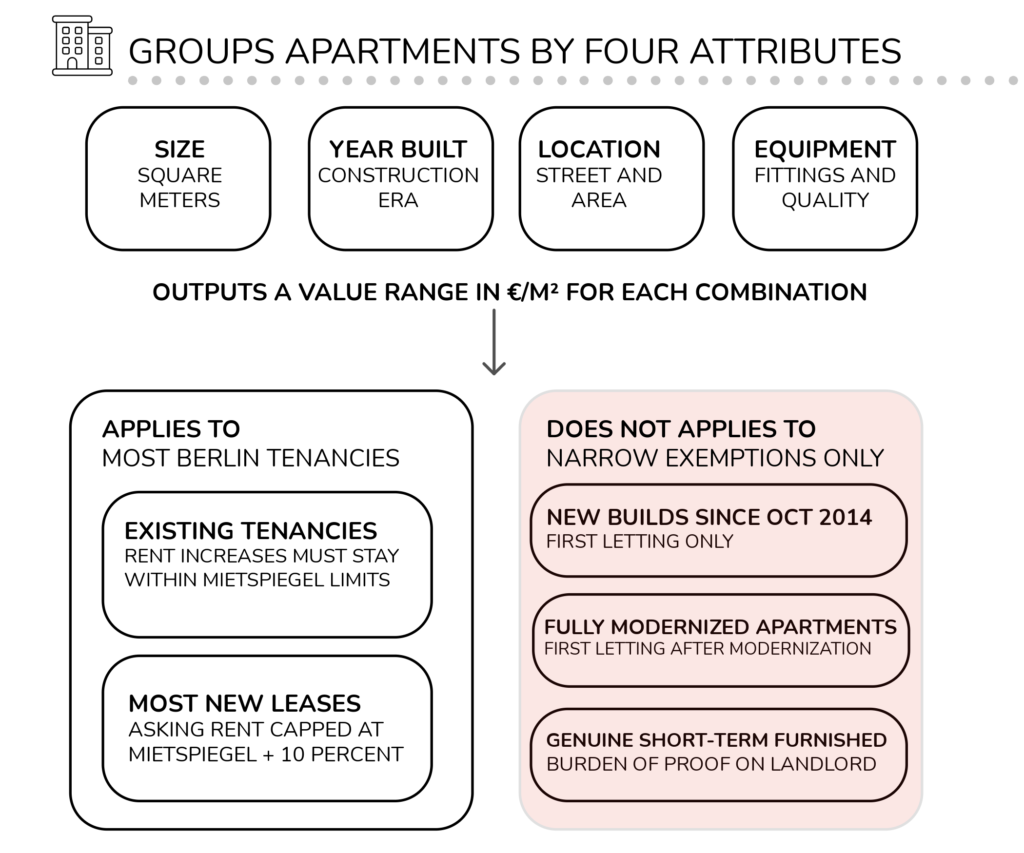
The Berliner Mietspiegel is a qualified rent index published by the Berlin Senate. It is not a price recommendation. It is a legally binding reference table that estimates the local comparable rent, the ortsübliche Vergleichsmiete, for residential apartments. It groups apartments by size, year of construction, location, and equipment, then provides a value range per square meter for each combination.
The Mietspiegel applies to existing tenancies and to most new leases. It does not apply to new-build apartments first rented after October 2014, to fully modernized apartments at the point of first letting after modernization, or to genuinely furnished short-term rentals. Those exemptions are narrow, and the burden of proof sits with the landlord.
How the 2026 index looks in practice
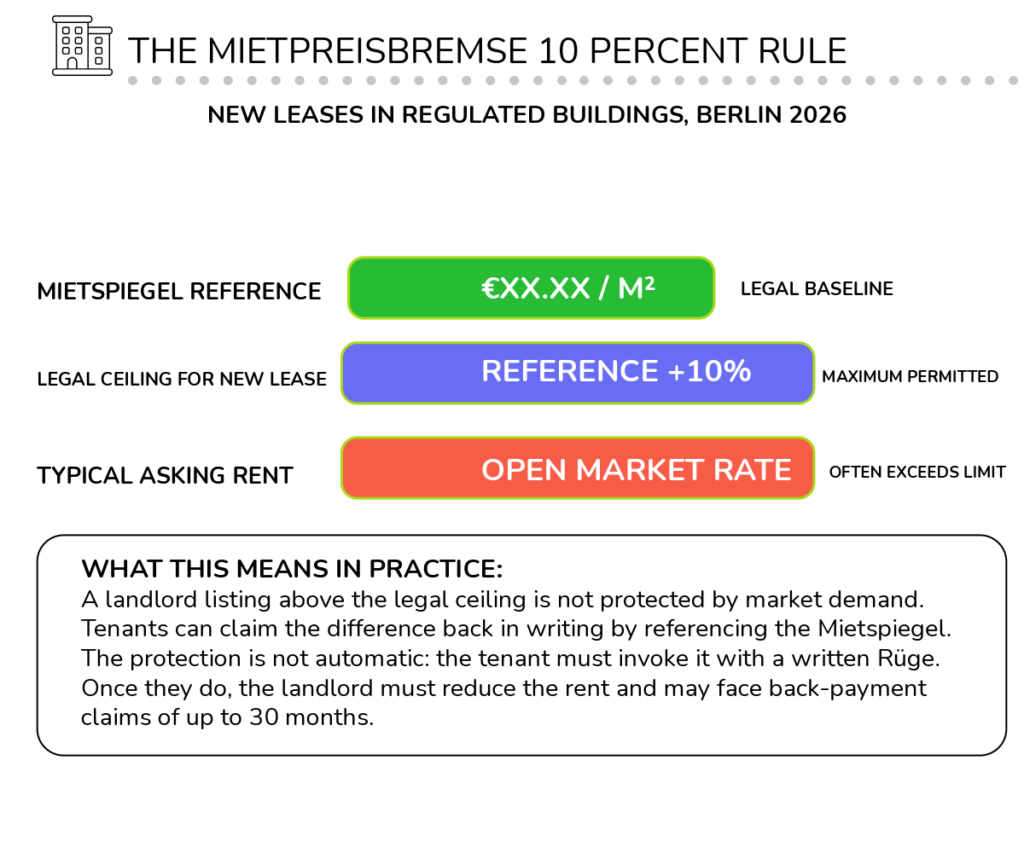
Asking rents for existing apartments in Berlin reached around 14.90 to 16.35 euros per square meter in late 2025, while the Mietspiegel reference values for comparable apartments often sit several euros below that. That structural gap is precisely the space the Mietpreisbremse is designed to close. For new leases in regulated buildings, the rent cannot exceed the applicable Mietspiegel value by more than ten percent.
For owners, this means that listing at the market asking rate without a Mietspiegel calculation is risky. Tenants who suspect overcharging can file a formal Rüge, and Berlin’s rent inspection office has been actively pursuing these cases since 2025.
When landlords can legally increase rent
Inside a running tenancy, rent increases are tightly regulated. A landlord can request an increase to align with the Mietspiegel value, but only after the rent has been unchanged for at least 15 months, and never by more than 15 percent over any three-year period in Berlin. The increase request must be in writing, must reference the applicable Mietspiegel, and must give the tenant two full calendar months to respond.
Get any of these steps wrong and the increase is void. This is one of the most common compliance failures among international landlords managing remotely.
What tenants should check on day one
Before signing anything, look up the building’s Mietspiegel category and compare it to the asking rent. If the asking rent is more than ten percent above the local reference, the lease is likely in breach of the Mietpreisbremse. The protection is not automatic, however. You need to send a written notice to the landlord referencing the relevant Mietspiegel value to claim the difference back.
Furnished apartments are a particular trap. Landlords can charge a reasonable furniture surcharge above the Mietspiegel, but courts have increasingly required transparency on how that surcharge is calculated. A sofa and a coffee machine do not justify a 40 percent premium.
Why this matters for property strategy
For owners, the Mietspiegel is not a constraint to work around. It is the foundation of any sustainable rental strategy in Berlin. Setting rent correctly the first time avoids legal exposure, reduces tenant turnover, and protects long-term yield. For tenants, knowing the index is the strongest negotiation tool available, regardless of your German language skills.
Your Home Berlin handles Mietspiegel-compliant rent setting and tenant communication for international owners. Reach us at info@yourhomeberlin.com