Berlin attracts talent, creatives, entrepreneurs, and families from all over the world. Thousands of people from outside Germany choose the city every year, and the housing market they encounter is nothing like what they are used to. Whether you are arriving for a job, a startup, or a fresh chapter, understanding how real estate works in Berlin before you sign anything will save you from the most common and most costly mistakes.
Finding an apartment as an Expat Is genuinely hard
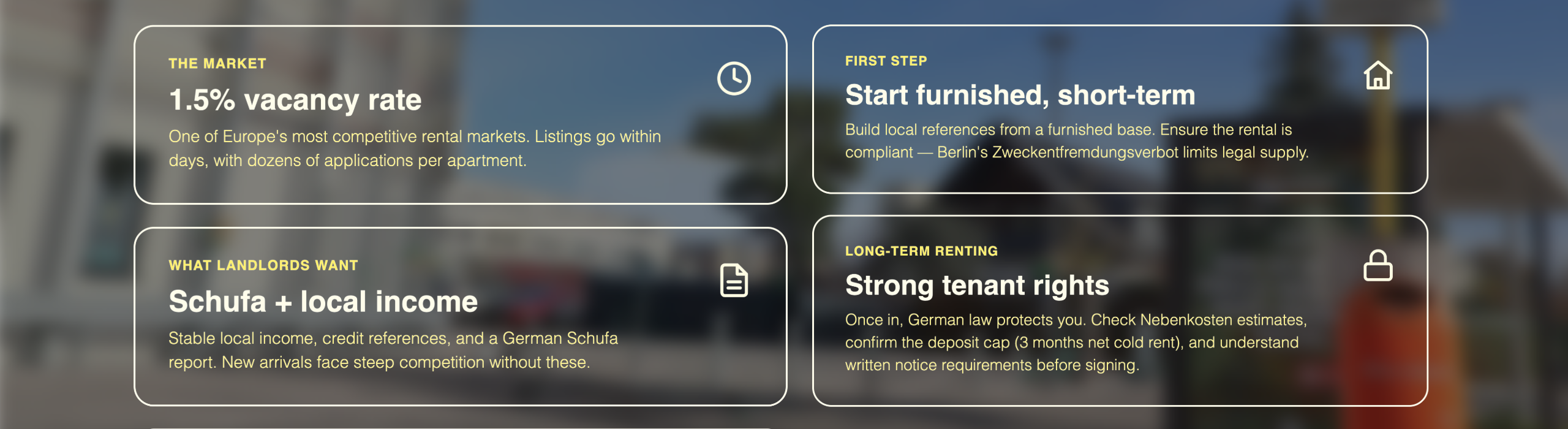
The Berlin rental market is one of the most competitive in Europe. With a vacancy rate of around 1.5 percent and listings often going within days, the pressure is real. Landlords receive dozens of applications for every apartment and typically choose tenants with stable local income, good credit references, and ideally a Schufa report, which is the German credit file. For someone newly arrived from abroad without any of these, competition is steep.
The most common solution for new arrivals is starting with a furnished short-term apartment while building local references. The challenge is that Berlin’s Zweckentfremdungsverbot significantly limits the supply of legal furnished short-term rentals, so finding a compliant one requires care.
Renting long-term: what you need to know
German tenancy law strongly protects tenants once a contract is in place. That is actually good news for expat renters. Once you are in, your rights are robust. Read the contract carefully before signing, ideally with someone who understands German housing law. Check that the Nebenkosten, the ancillary cost advance, reflects realistic utility estimates. Make sure the deposit amount is within the legal limit of three months net cold rent. And understand that terminating a German tenancy requires written notice and specific lead times.
Buying property as a non-german resident
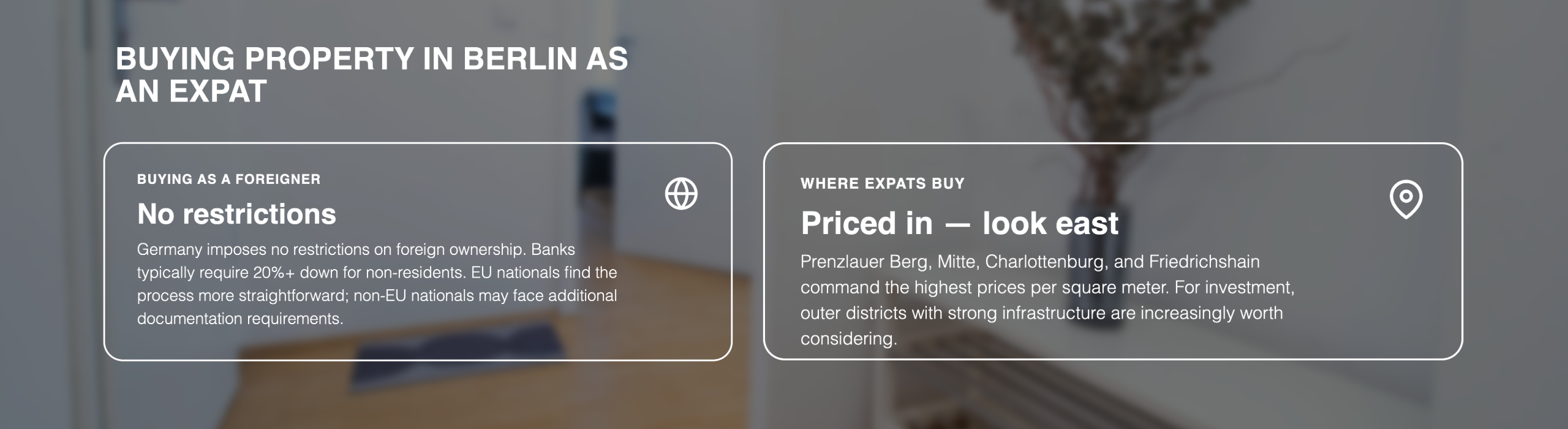
Germany imposes no restrictions on property ownership by foreigners. Expats with stable employment in Germany can and do obtain mortgages, though banks typically look more carefully at non-residents and may require a larger down payment, often 20 percent or more of the purchase price. EU nationals generally find the process more straightforward. Non-EU nationals can still buy but may face additional documentation requirements.
The areas where expats tend to concentrate, Prenzlauer Berg, Mitte, Charlottenburg, Friedrichshain, are also the areas where prices per square meter are highest. If you are buying as an investment rather than to live in, outer districts with strong infrastructure are increasingly worth considering.
If you own property and move away
This is the situation many expat property owners find themselves in. They bought during their time in Berlin, then relocated. Now they own a German apartment in a city they no longer live in, with tenants, legal obligations, and an annual tax return to file in Germany.
Remote management works well when you have the right people on the ground. A professional manager who communicates in English, handles tenant relations, manages maintenance, and produces clear financial reporting turns a potentially stressful asset into a genuinely passive investment.
Your Home Berlin is built specifically for international property owners in Berlin.