Let’s talk about your home in Berlin. Whether you’re buying, selling, or renting, we make the process clear and personal. Tell us what you need ; we’ll help you take the next step.
Market trends, property updates and curated insights, in your inbox.
Berlin just changed the rules for furnished rentals.
Here’s what it means for you.
Starting today, renting your Berlin apartment on a furnished or temporary basis in force.
If you own a property in Berlin and you have been renting it out furnished, on a short or medium-term basis, this article is for you.
The Berlin Senate passed new administrative regulations that came into force on 18 April 2026.
From today, any temporary rental (Wohnen auf Zeit) or subletting arrangement inside one of Berlin’s social preservation zones (Milieuschutzgebiete) requires formal approval from the local Bezirksamt. No approval, no legal rental.
What is ‘wohnen auf zeit’ and why did Berlin target it?
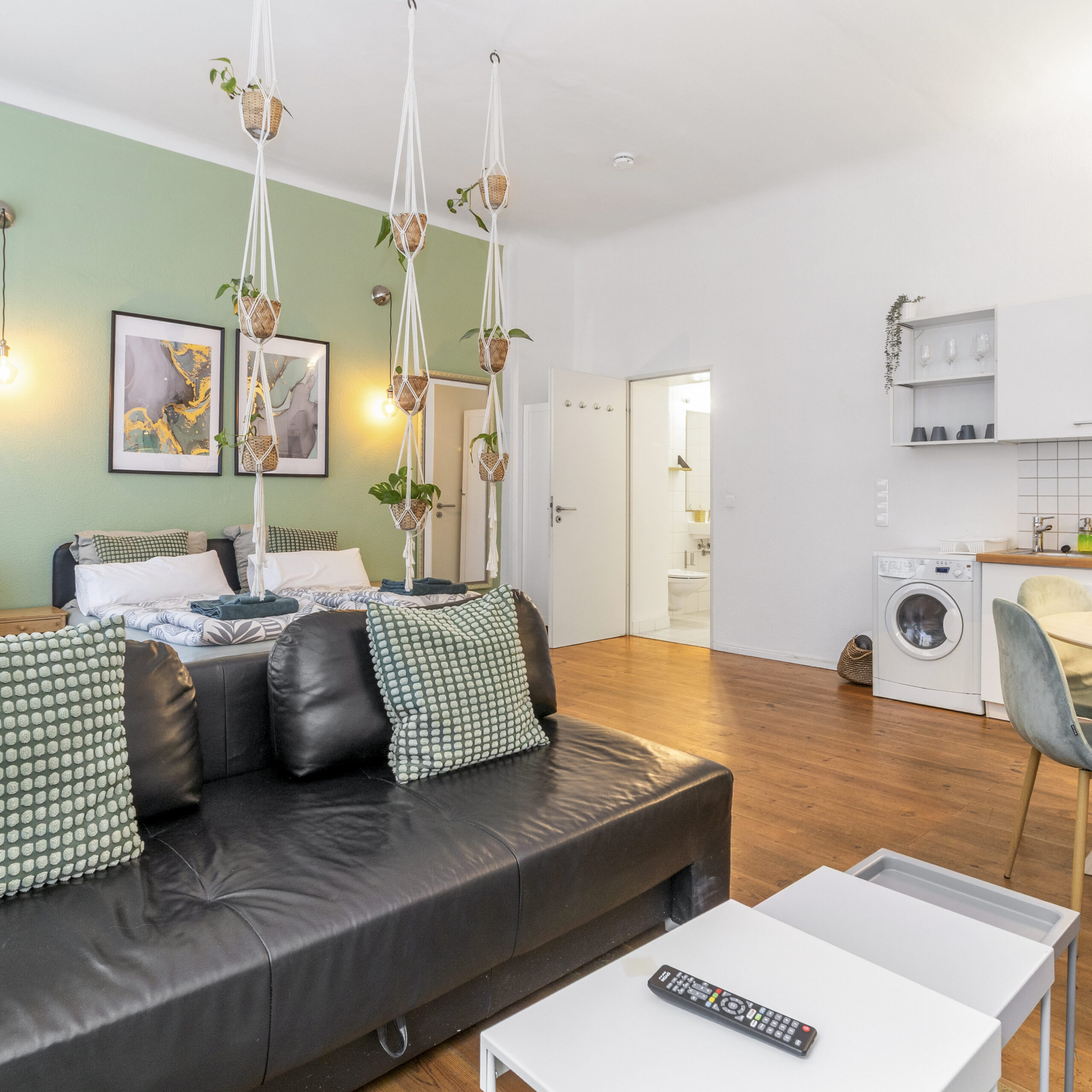
Wohnen auf Zeit refers to the practice of renting out an apartment on a temporary or furnished basis, typically between three months and one year, under §549 BGB. In recent years, it became a popular workaround because these arrangements fell outside the Mietpreisbremse and other tenant protections.
The numbers tell the story. In 2012, Berlin had around 10,000 Wohnen-auf-Zeit listings alongside 65,000 regular rental listings. By 2022, that had completely reversed: 28,000 temporary listings vs. only 24,000 regular rentals. The temporary market overtook the regular market.
Berlin decided enough was enough.
What Changed on 18 April 2026?
The Senatsverwaltung für Stadtentwicklung, Bauen und Wohnen issued new regulations called „VV Genehmigungskriterien soziale Erhaltungsgebiete.“ These replace the previous rules from November 2024 and introduce a clear approval requirement for:
Furnished or temporary rentals of any kind in Milieuschutzgebieten
Subletting arrangements (Untervermietung) in the same areas
Commercial „Wohnen auf Zeit“ business models operating in these zones
The target is specifically commercial operators and overpriced sublet models that pull housing from the regular market. The Senate made clear this is not meant to catch normal private landlords in every situation.
What is still allowed?
Not everything is now prohibited. The regulations distinguish clearly between commercial exploitation and legitimate use.
These remain generally approvable:
Fixed-term contracts under §575 BGB (Zeitmietvertrag), for example where an owner needs the apartment back for their own use or for a family member
Private individuals temporarily subletting their own primary or secondary residence
Standard short-term sublets by private persons in genuine personal circumstances
What is targeted and likely to be refused:
Platforms or operators running multiple apartments as a Wohnen-auf-Zeit portfolio
Overpriced furnished rentals structured to avoid Mietpreisbremse obligations
Any arrangement where the purpose is to keep housing off the regular rental market permanently
Which areas are affected?
Berlin currently has over 80 Milieuschutzgebiete spread across the inner city. The most affected districts are:
Friedrichshain-Kreuzberg: 12 zones including Boxhagener Platz, Bergmannstr.-Nord, Samariterviertel, Weberwiese, Luisenstadt
Pankow / Prenzlauer Berg: 13+ zones, the densest concentration in the city
Mitte / Wedding: 12 zones including Leopoldplatz, Sparrplatz, Humboldthain
Neukölln: 10 zones including Reuterplatz, Flughafenstr./Donaustr., Schillerpromenade
Charlottenburg-Wilmersdorf: 7 zones including Klausenerplatz, Mierendorff-Insel
Tempelhof-Schöneberg: 8 zones
If you are unsure whether your property sits inside a protected zone, check your exact address at milieuschutz.org.
What should Berlin property owners do right now?
If you own a property in a Milieuschutzgebiet and currently rent it out on a temporary or furnished basis, here are the practical steps:
Check your address. Use the address checker at milieuschutz.org to confirm whether you are in a protected zone.
Review your current rental arrangement. Is it a standard Mietvertrag, a §575 fixed-term contract, or a furnished Wohnen-auf-Zeit model?
Speak to a professional. If you are operating a furnished or temporary rental model, get legal advice before your next tenancy renewal.
Do not panic if you are a private landlord. The regulations are primarily aimed at commercial operators. Legitimate private use cases remain approvable.
FAQ: Milieuschutz Berlin 2026
Does this affect my Airbnb or short-term tourist rental?
Short-term tourist rentals under three months fall under a different set of rules (Zweckentfremdungsverbot) and are not the primary target of this new regulation. However, if your property is in a Milieuschutzgebiet, check both sets of rules.
I have a §575 BGB Zeitmietvertrag. Does this affect me?
Standard §575 fixed-term contracts for legitimate reasons such as Eigenbedarf or planned building works remain generally approvable. You are not automatically in violation, but you still need to apply to the Bezirksamt for approval before signing.
Who approves or refuses my rental arrangement?
The local Bezirksamt (Stadtplanungsamt) handles approvals. Enforcement varies by district. The Bezirk has up to 4 months to decide; if they do not respond, approval is deemed granted.
What happens if I continue without approval?
Operating an unapproved Wohnen-auf-Zeit arrangement in a Milieuschutzgebiet can result in a Nutzungsuntersagung (use prohibition) and potential fines. Bezirk Neukölln already issued prohibitions for 15 apartments in a single building in early 2026.
Does this apply to new agreements only or also existing ones?
The new regulations apply to current arrangements and new agreements going forward. If you have an active rental that no longer complies, seek legal advice immediately.
The Bottom Line
Berlin has been moving in this direction for years. The city’s housing market is under pressure, and temporary rentals were quietly pulling tens of thousands of apartments off the regular market. The Senate acted.
If your property is in a Milieuschutzgebiet and you have been operating a furnished or temporary rental model, now is the time to review your setup and get professional advice. This is one of those changes where waiting costs more than acting.
Thinking about how these changes affect your Berlin property?
Your Home Berlin helps property owners navigate German rental law and manage their apartments the right way.